Release time:2025-09-29
Recently, Zhongke Motong (Changzhou) Intelligent Manufacturing Co., Ltd. and Nanjing Panda Electronic Equipment Co., Ltd. (hereinafter referred to as "Panda Electronic Equipment") formally reached a strategic cooperation, marking the opening of a new chapter of in-depth collaborative development in the field of intelligent equipment. Based on the national "dual-carbon" strategy and the requirements for high-quality development of the manufacturing industry, this cooperation integrates the core advantages of both parties, aiming to promote the iterative upgrading of the intelligent manufacturing level of the new energy industry and inject new momentum into the development of the industry.
Panda Electronic Equipment a National High-tech Benchmark in Smart Manufacturing for Thirty Years
Panda Electronic Equipment is a subsidiary of Nanjing Panda Electronics Company Limited, focusing on the field of intelligent manufacturing. It builds intelligent production lines through robot technology and automatic control systems, forming an independent and controllable intelligent manufacturing system. It is a leading domestic "integrated" intelligent transformation and digital transformation service provider and a national high-tech enterprise, ranking among the first batch of "Jiangsu Province Intelligent Manufacturing Leading Service Providers". Its full-dimensional service ecology of "high-end equipment + industrial software + system integration + smart factory" is unique, and the iManuf digital platform integrates MES, WMS and other modules with digital twin technology to realize full-level visual management of factories.
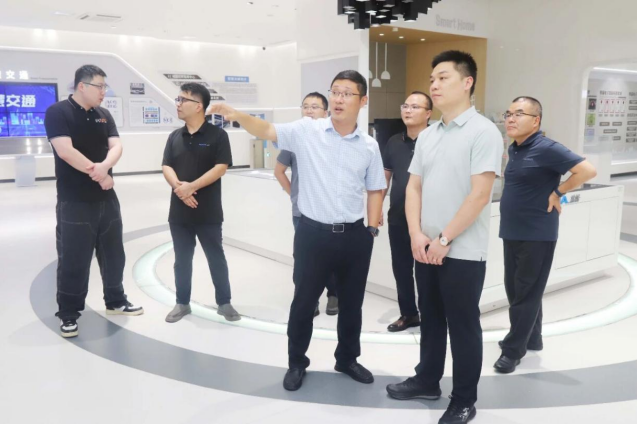
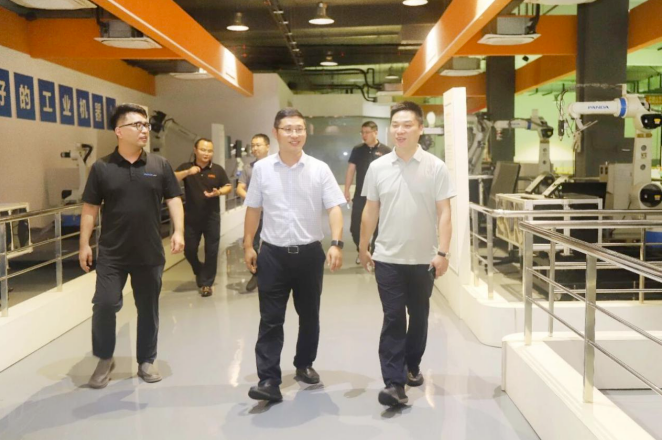
Complementary Advantages Building a New Eco-system for Industrial Collaborative Development
As an AI-driven leader in industrial automation, Zhongke Motong focuses on the core components of new energy vehicles, providing integrated digital intelligent solutions for thermal management, electric drive, and wire-controlled chassis. Its self-developed CASMT AI flexible automation large model can intelligently generate and dynamically optimize production plans from demand text, possessing core competitiveness in technology research and development. Panda Electronic Equipment, on the other hand, has rich industrial landing experience, a complete supply chain system, and profound manufacturing heritage, enjoying a wide reputation in the field of high-end equipment research and development and production.
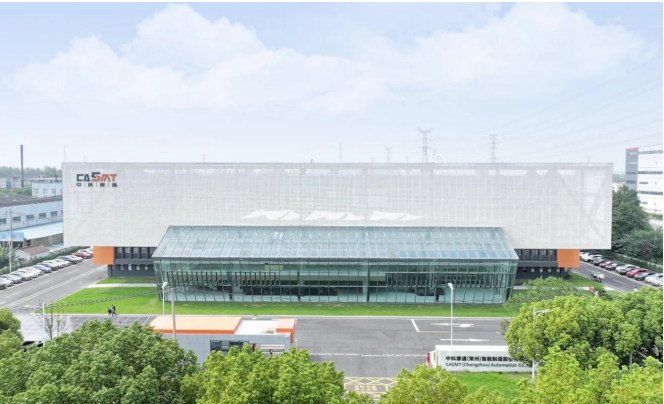
The cooperation between the two parties will achieve a deep integration of "technological innovation + industrial landing". The cutting-edge technology of Zhongke Motong can provide support for the intelligent equipment upgrade of Panda Electronic Equipment, helping its production system move towards high efficiency, high precision, and green environmental protection. In turn, the industrial resources and market channels of Panda Electronic Equipment will also build a broad platform for the transformation of Zhongke Motong's technological achievements, accelerating the large-scale application of innovative technologies. This complementary advantage model will effectively open up the key link from technology research and development to industrial application, building a brand-new eco-system for collaborative development.
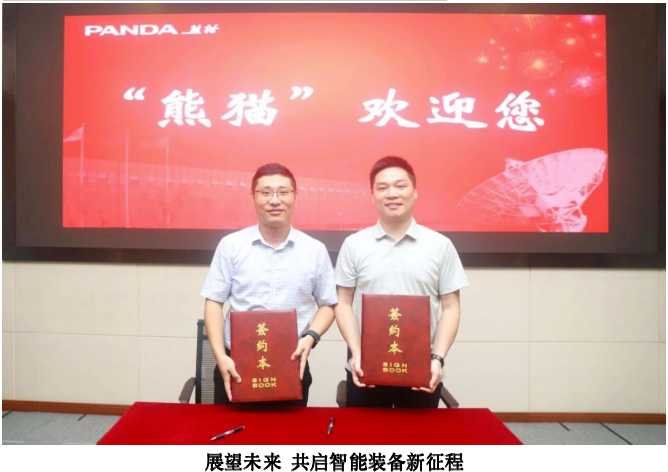
According to the strategic cooperation agreement, both parties will focus on the core needs of intelligent equipment and carry out all-round cooperation in multiple dimensions such as technology research and development, market expansion, and industrial eco-system building. In the future, they will focus on optimizing intelligent production processes, innovating green manufacturing technologies, and integrating industrial chain resources to jointly explore new paths and models for intelligent equipment.
Taking this cooperation as a starting point, both parties will adhere to the concept of "mutual benefit and win-win, collaborative development", continuously deepen the connotation of cooperation, expand cooperation fields, accelerate the transformation of technological achievements and the landing of benchmark projects. Through the complementary advantages of "system integration capability + precision manufacturing process", they will help enterprises reduce costs and increase efficiency, and promote the industry to transform towards high-end and intelligent direction. In the future, they will also work together to expand the international market, participate in global competition with joint solutions, and provide key support for Chinese smart manufacturing to occupy a commanding height in the global new energy industry.
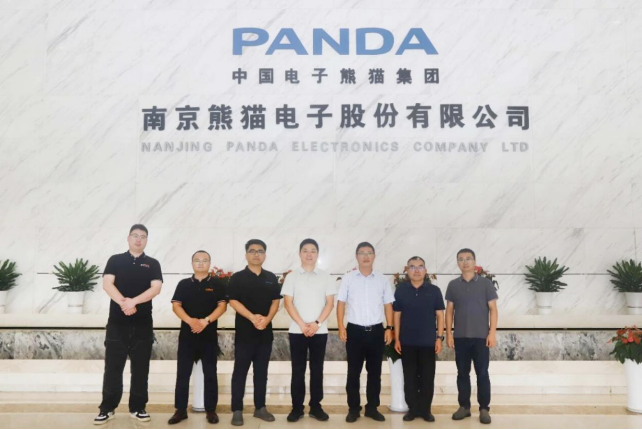
```
2026-10-30
Recently, CASMT (Changzhou) Intelligent Manufacturing Co., Ltd.has completed construction and commissioning of its 2nd-generation embodied robot final assembly and test line, marking a major breakthrough for the company in the field of complete-machine manufacturing equipment for embodied intelligent robots. This production line delivers integrated intelligent manufacturing capabilities covering core component fabrication, complete machine assembly and performance testing. It provides a more mature manufacturing solution for embodied robots to transition from R&D validation to mass production, and also reflects CASMT’s continuous layout focused on intelligent manufacturing equipment to support mass deployment of the robotics industry. An embodied robot is highly complex intelligent equipment integrating mechanical structure, power system, sensing technology, intelligent control and AI algorithms. As the embodied intelligence industry accelerates, robot manufacturing is shifting from prototype R&D toward large-scale mass production. Nevertheless, traditional manual assembly and commissioning suffer from low productivity, inconsistent quality and high manufacturing costs, failing to meet the demands of mass production. Therefore, building automated, flexible and digital robot production lines to achieve precise assembly of core components, efficient performance testing of complete machines and full-process quality control has become a critical foundation for the industrial rollout of embodied robots.The complete machine calibration and test workstation serves as a key quality inspection stage after robot assembly. It covers three core processes: checkerboard calibration, whole-machine motion testing and voice wake-up interaction testing. Through automated calibration, comprehensive performance inspection and intelligent interaction verification, the workstation fully validates robot vision, motion and voice functions to guarantee stable machine performance and consistent product quality before delivery. Checkerboard Calibration Process· Multi-camera vision calibration:Checkerboard targets are used to calibrate the precision of the robot vision system, with flexible switching between different target sizes. Coordinated multi-camera calibration ensures the accuracy of visual recognition and spatial positioning.· Automated calibration operation:The workstation integrates an adjustable target mechanism and control host to achieve precise positioning of calibration targets. Standardized calibration workflows reduce manual intervention and improve calibration efficiency and consistency.· Compact workstation layout:The compact workstation measures approximately 4000×3000×3000 mm, integrating calibration mechanism, control system and safety enclosure. Optimized equipment layout supports high-efficiency whole-machine vision calibration. Whole-Machine Motion Testing Process· All-round motion performance test:Nine test items are integrated including communication, static noise, dynamic noise, mobility, slope climbing and full-body self-inspection. It comprehensively verifies the operational stability, motion coordination and adaptability of the robot under complex working conditions.· Joint vision-motion calibration:Combining vision calibration, mobility test and optical motion calibration, the system performs coordinated calibration of the robot’s visual perception and motion control systems to improve spatial positioning accuracy and dynamic motion control.· Standardized multi-scenario inspection:Dedicated test platforms and calibration equipment validate whole-machine damping, mobility and wheeled chassis climbing performance. Standardized test workflows improve reliability and consistency of finished-machine quality inspection. Voice Wake-up Interaction Test Process· Intelligent voice wake-up test:Standardized voice commands and directional sound sources are used to verify wake-up capability under different acoustic environments. Key metrics include wake-up rate, response latency and stability of continuous interaction.· Multi-condition acoustic environment simulation:Typical scenarios such as offices, catering spaces and shopping malls are simulated with adjustable noise intensity, sound source distance and incident angle to comprehensively evaluate speech recognition and anti-interference performance in complex acoustic environments.· Full-process interaction performance verification:Integrating voice playback, wake-up response, feedback recognition and data logging, the system enables systematic evaluation of interactive performance. Metrics including wake-up rate, false wake-up rate and false rejection rate guarantee stable and reliable voice interaction. As the embodied intelligence industry accelerates toward large-scale deployment, robot manufacturing is transforming from single-unit R&D to standardized, automated and batch production. Drawing on years of R&D experience in intelligent manufacturing equipment, CASMT continues to expand its footprint in the embodied robot industry. It has built a complete intelligent manufacturing solution portfolio covering fabrication ofcoreless motors, RV reducers, planetary/harmonic reducers, roller screws, frameless torque motors and joint modules, as well as complete machine assembly and testing. By applying mature automated assembly, intelligent inspection and digital control technologies to robot manufacturing, CASMT delivers systematic technical support for mass production of embodied robots. The launch of the 2nd-generation embodied robot final assembly and test solution represents a key milestone of CASMT’s deepened layout in embodied intelligent manufacturing. Going forward, CASMT will keep innovating intelligent manufacturing technologies and expanding industrial applications, helping the embodied robot industry break through mass-production bottlenecks and accelerate the leap from technical R&D to large-scale commercial deployment.2026-10-30
As a core platform for the industrialization of intelligent manufacturing and embodied intelligence, the 2026 China International Industry Fair gathers cutting-edge industrial technologies worldwide. At this exhibition, CASMT jointly built two booths with Siemens and JD Industrial. Based on real industrial working conditions, the booths intuitively demonstrated the complete implementation path of embodied robots from standalone operation to multi-robot collaboration. Meanwhile, CASMT and JD Industrial held a strategic cooperation signing ceremony on October 13th to deepen industrial collaboration and jointly explore scalable deployment solutions for embodied intelligence in industrial scenarios.At the joint booth of CASMT and Siemens, on-site live operation of an embodied robot moving and picking workpieces was demonstrated. The complete solution relies on SIMOVE FleetManager to complete task scheduling of various equipment and production line signal interaction, breaking down data and task barriers between different devices. The embodied robot performs autonomous movement, real-time perception, adaptive grasping and precise positioning in physical space. It brings industrial scheduling capability into physical operation processes, verifies the engineering value of standalone embodied equipment for stable execution of process tasks on the workshop floor, and realizes a closed loop from digital scheduling commands to physical motions.During the exhibition, Bao Xianwei, Co-founder of CASMT and CEO of Infinite Determinacy, was invited to the live expert dialogue hosted by Siemens. Focusing on the theme "From Core Components to Factory Applications — Practices of the Scalable Humanoid Robot Industrial Chain", he discussed with industry experts the engineering path and scalable deployment of the humanoid robot industrial chain. This dialogue extended the perspective from single equipment to the whole industrial chain, presenting the collaborative ecosystem required for embodied intelligent equipment to be applied in industry.The joint booth of CASMT and JD Industrial showcased an industrial assembly scenario with three robots operating collaboratively. The scenario reproduced the workflow logic of real production lines. Multiple embodied robots cooperate according to process sequences to complete continuous assembly procedures. Designed to meet the flexible production needs of factories, this multi-robot collaboration solution verifies the capabilities of multi-robot resource allocation, path coordination and collision avoidance. It provides practical engineering references for cluster operation of multiple devices in discrete manufacturing scenarios and explores the application potential of embodied robot clusters in complex process environments.During the exhibition, the JD Industrial Robot Component Industry Development Alliance was officially launched. As one of the alliance members, CASMT works with industrial chain partners to promote the independent development and industrialization of core robot components.At the same time, CASMT and JD Industrial held a strategic cooperation signing ceremony. Leveraging their respective strengths in intelligent equipment, industrial supply chain and production line digitalization, both parties will jointly build an industrial application ecosystem for embodied intelligence, reduce multi-device integration costs, shorten project delivery cycles, improve overall equipment efficiency, facilitate deep integration of embodied robots into existing industrial production lines, and drive embodied intelligence from booth demonstrations toward large-scale industrial applications.From standalone autonomous execution to multi-robot cluster collaboration, the two scenario demonstrations point to the same direction: enabling industrial AI to step out of digital interfaces and take root in real production lines. CASMT will continue to cooperate with ecosystem partners, deepen the engineering capabilities of embodied intelligence, empower flexible upgrading of the manufacturing industry with stable and reliable industrial equipment, and explore new boundaries of intelligent manufacturing.2026-10-30
As Physical AI moves from models to production lines, the focus of embodied intelligence is shifting from "whether it can move" to "whether it can be manufactured stably and operate reliably". Consistency of core components and manufacturability of automated production lines serve as the critical foundation for robots to evolve from prototypes into large-scale applications. From October 20 to 22, the 2026 Physical AI and World Model Conference was held at the Nanjing International Expo Center, where CASMT (Changzhou) Intelligent Manufacturing Co., Ltd. made an appearance. Centered on core components for embodied robots, CASMT showcased relevant automated production lines and industrial scenario applications. Supported by intelligent manufacturing, the company explores practical pathways for embodied intelligence to be deployed in industry.Focused on Physical AI and world models, the conference brought together enterprises from autonomous driving, embodied intelligence, computing infrastructure, intelligent manufacturing and other sectors to jointly explore new opportunities for the integration of AI and the real economy.CASMT (Changzhou) Intelligent Manufacturing Co., Ltd. participated in the event with a focus on core components of embodied robots. It exhibited relevant automated production lines and robot deployments in industrial scenarios, demonstrating the development direction of deep integration between intelligent manufacturing and embodied intelligence.With the accelerated advancement of embodied intelligence, robots are transitioning from technical R&D to practical deployment. Core components underpin robots’ motion and manipulation capabilities, while automated and standardized manufacturing systems enable stable production and scalable delivery. At this exhibition, CASMT highlighted automated production lines for embodied robot core components and corresponding industrial applications, illustrating its business layout in intelligent manufacturing. From core component fabrication to automated production line implementation, intelligent manufacturing not only improves productivity and quality control, but also provides vital support for the industrialization of embodied intelligence technologies.The development of Physical AI relies on collaborative innovation across core components, smart equipment, manufacturing processes and application scenarios.Seizing opportunities in the embodied intelligence industry, CASMT will keep track of technical trends and market demands, actively explore integrated applications of intelligent manufacturing and robotics, strengthen exchanges and cooperation along the industrial chain, and align manufacturing capacity with real-world application requirements.Moving forward, CASMT will remain focused on intelligent manufacturing. Building on core component production and automated production lines, the company will facilitate deep integration between embodied intelligence and industrial manufacturing, contributing to the growth of the robotics industry.

Mobile
Copyright © 2023 中科摩通(常州)智能制造股份有限公司
苏ICP备2021002713号-1