
Release time:2025-09-17
In today’s era where AI technology is accelerating its penetration across industries, the question of how frontier technologies can truly serve the real economy has become a focal point of attention. Dr. Yintang Dai, Chief Scientist of the CASMT AI team, leveraging two decades of academic expertise and industrial practice in the field of artificial intelligence, has led his team to successfully develop the "CASMT AI Flexible Automation Design Large Model," providing breakthrough solutions for intelligent manufacturing and industrial design. This scientist, who integrates top-tier academic background with practical industry experience, is advancing an “integration of research, education, and application” innovation model, driving AI technologies from the laboratory to large-scale application.
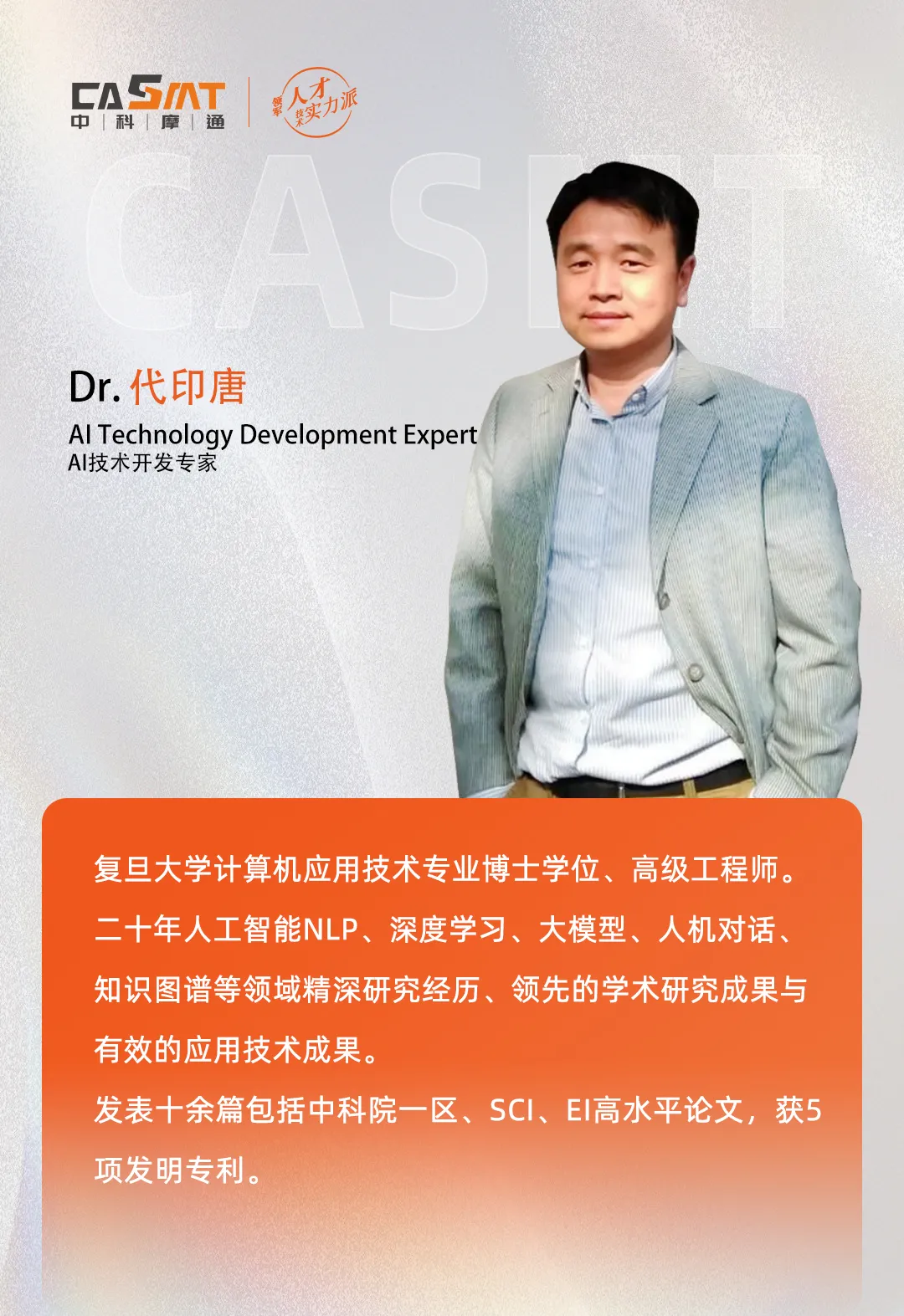
Technological Breakthrough: Industrial Practice of the Flexible Automation Design Large Model
As one of the core achievements of the CASMT AI team, the "CASMT AI Flexible Automation Design Large Model" overcomes the limitations of traditional industrial design software characterized by “single functions and fixed processes.” By integrating natural language processing, deep learning, and knowledge graph technologies, the model realizes intelligent generation from requirement texts to design solutions, supporting multi-scenario and cross-domain automation design needs.
“Traditional industrial design requires engineers to manually write parameters and debug models, whereas our system can understand natural language descriptions of design requirements and automatically generate 3D models and process solutions that meet engineering standards,” explained Dr. Dai. This innovation stems from his deep insight into industry pain points: during intelligent manufacturing upgrades, enterprises often face challenges such as long design cycles, high customization costs, and shortages of specialized talent.
The technical team has built a large-scale industry knowledge base and, by combining self-supervised learning with reinforcement learning algorithms, has enabled the model to possess a closed-loop ability of “learning–reasoning–optimization.”
Integration of Research and Application: From the Laboratory to Industry
Dr. Dai’s career has always been driven by a persistent pursuit of “technology implementation.” After joining CASMT, he promoted the establishment of an innovation cycle of “demand insight – technology R&D – scenario verification – iterative optimization.” During the development of the CASMT AI large model, the team co-established joint laboratories with leading enterprises in the electronic information and other sectors. Leveraging CASMT’s strong design resource base, they collected millions of high-quality training data points from over 100 production lines and tens of thousands of design requirement data sets, ensuring that the model output aligns with engineering realities.
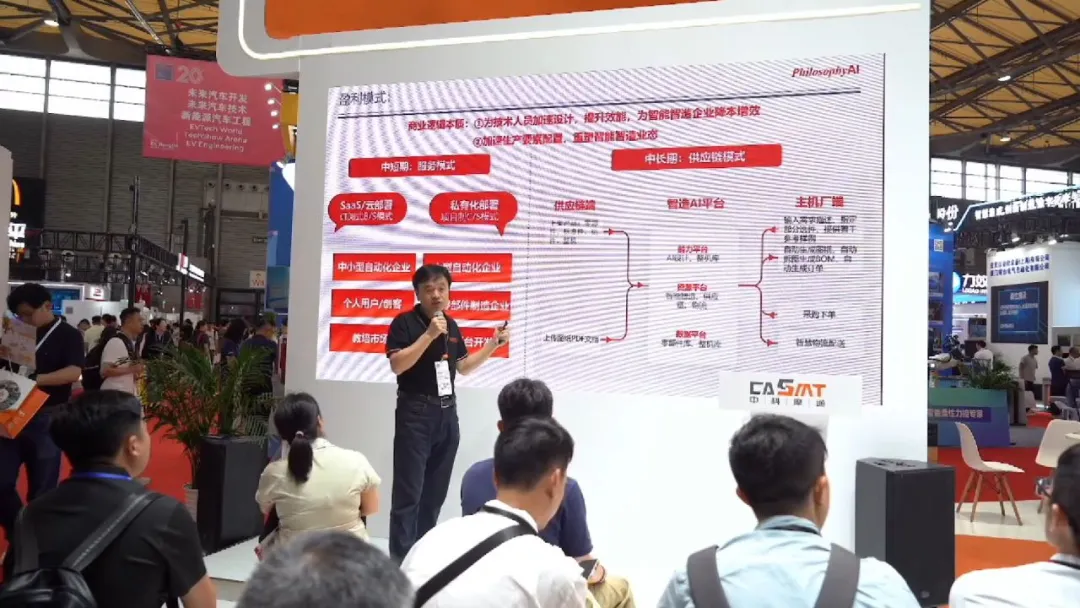
Ecosystem Building: Cultivating Innovative Talents in the AI Era
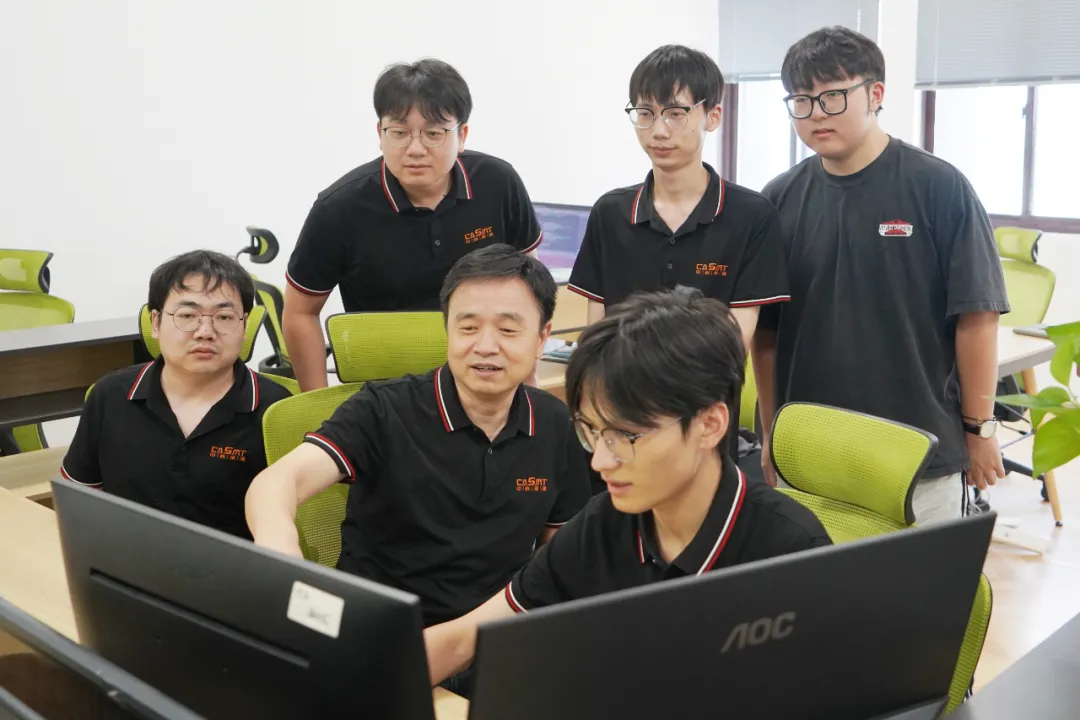
Dr. Dai has always emphasized knowledge transfer and team development. At CASMT, he introduced a “mentorship system,” requiring technical experts to undertake both R&D and training responsibilities, thereby cultivating interdisciplinary talents proficient in both algorithms and processes.
“The development of artificial intelligence requires a two-way collaboration between academia and industry,” Dr. Dai noted. The team is collaborating with multiple universities to establish “intelligent design joint laboratories,” opening part of the desensitized industry data for teaching and research while offering outstanding students opportunities to participate in real-world projects. This open collaboration model has already attracted more than 20 members, including 5 PhDs and 6 Masters graduates, to join the team.
Future Outlook: Making AI a Universal Tool for Industrial Upgrading
In the face of global competition driven by large model technologies, our goal is not to replace human labor with AI, but rather to free human resources from tedious and repetitive design tasks, enabling them to truly focus on higher-level research and development in manufacturing technologies.
The team’s next step is to optimize the lightweight deployment capability of the model to reduce the application threshold for small and medium-sized enterprises, while also exploring integration paths with technologies such as digital twins and the industrial metaverse. Currently, the team has also launched the research and development of the CAX AI unified platform, which integrates design, simulation, and manufacturing.
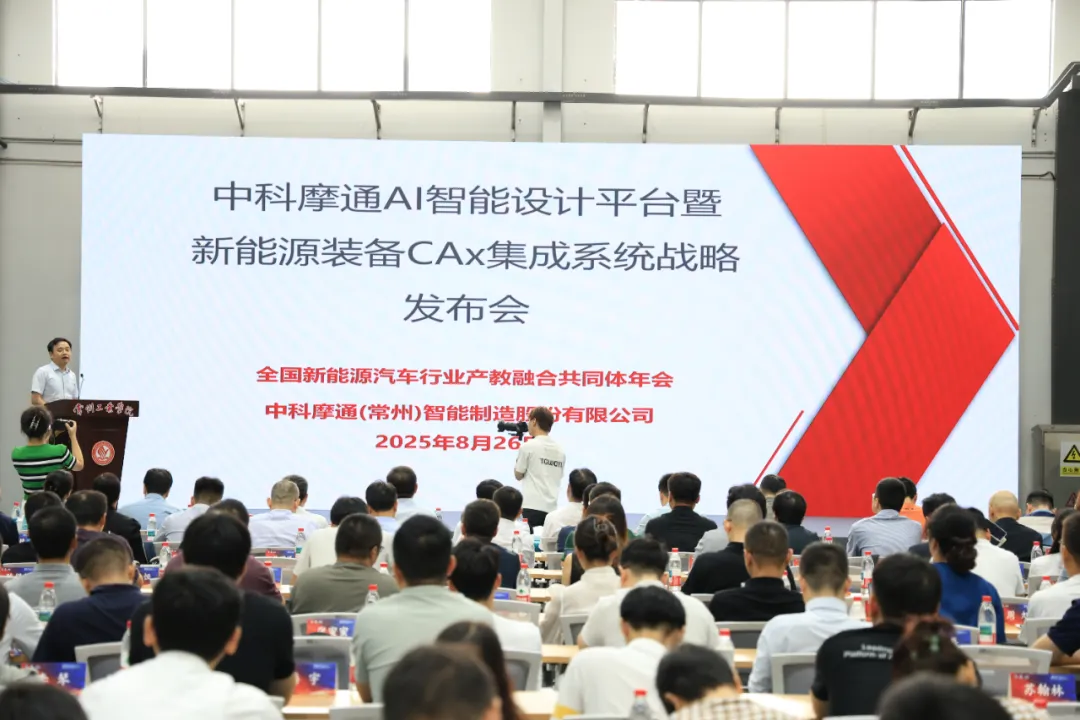
The ultimate value of artificial intelligence does not lie in the size of its parameters, but in whether it can truly solve real problems in human society. Leveraging its multimodal, domain-specific industrial large model technology, the CASMT AI Flexible Automation Design Large Model deeply empowers intelligent manufacturing, driving efficiency improvements and model innovation across the industry. At the same time, through data-driven decision-making and flexible automation design, it reshapes the industrial ecosystem and becomes a core engine for upgrading intelligent manufacturing.
2026-10-08
Recently, the 2026 Changzhou International New Energy Expo grandly opened. CASMT (Changzhou) Intelligent Manufacturing Co., Ltd., a national key"Little Giant"enterprise in Changzhou, participated with two core technology segments, showcasing the CASMT AI + CAX industrial simulation foundation and the capability for deploying embodied robots in industrial scenarios, empowering the digital transformation of manufacturing in the Capital of New Energy with industrial AI and embodied intelligence technologies. This year's Expo focused on frontier tracks such as new energy, energy storage, and high-end intelligent equipment, bringing together upstream and downstream enterprises, technology experts, and purchasing customers in the industry chain. CASMT's booth prominently presented two core segments.The first segment is the CASMT AI + CAX industrial simulation foundation. This self-developed platform deeply connects the full-chain CAD/CAE/CAM industrial software and, relying on industrial agents, builds a closed-loop system of "design - simulation - manufacturing", restructuring the traditional serial engineering workflow into an AI-driven parallel design model. The platform accumulates a massive knowledge base of discrete manufacturing processes, enabling rapid intelligent generation of production line solutions, virtual simulation verification, and process iteration optimization, greatly shortening the design and delivery cycle of non-standard automated production lines, reducing project trial-and-error costs, achieving right-first-time design, and providing underlying digital intelligence support for production lines in new energy thermal management, electric drives, and energy storage batteries.The second segment of the exhibition focuses on the capability for deploying embodied robots in industrial scenarios, showcasing their engineering application achievements in real industrial environments. Different from laboratory concept demonstrations, the exhibits address the pain points of flexible production in manufacturing, reproducing typical processes such as precision assembly and workpiece quality inspection in factories. Relying on embodied perception, autonomous decision-making, and multi-robot collaboration, they adapt to production line needs for multi-variety, small-batch manufacturing. Through live operational demonstrations, the site intuitively presents the robots' adaptive working capabilities in unstructured industrial environments, breaking the limitations of traditional automation equipment"fixed programs and single workstations", enabling rapid product changeover and flexible deployment. The segment fully demonstrates the industrialization journey of embodied intelligence from technical R&D to production line practice, providing deployable flexible automation solutions for industries such as automotive, equipment manufacturing, and new energy, helping manufacturing reduce costs and improve efficiency and advancing the transformation and upgrading of intelligent manufacturing.At the exhibition, CASMT's technical team received many guests from new energy enterprises, equipment manufacturers, and research institutions, conducting in-depth exchanges on topics such as the application of the industrial simulation foundation in production line planning, the deployment pathways of embodied robots in factories, and the intelligent upgrading of new energy plants, and following up on multiple cooperation intentions.Building on the advantages of Changzhou's new energy industry cluster, CASMT continues to explore the industrial integration and innovation of industrial AI and embodied intelligence. In the future, the company will continue to iterate on the CASMT AI + CAX industrial simulation foundation, refine its industrial manufacturing solutions for embodied robots, promote the deep integration of digital simulation technology with physical manufacturing, help the new energy and high-end equipment industries improve quality and reduce costs, and inject new momentum for intelligent manufacturing into the construction of Changzhou as the Capital of New Energy.2026-10-08
Recently, CASMT (Changzhou) Intelligent Manufacturing Co., Ltd. was invited to attend the ATC Forum — Embodied Robot and Integrated Module Technology Summit. At the summit, the company showcased its latest intelligent manufacturing solutions for embodied robot components, and Yan Jiaxiang, General Manager of the Embodied Intelligent Equipment Business Unit, delivered a keynote speech titled "Assembly Process and Testing of Core Components for Embodied Robots", discussing with industry experts and supply chain partners the key pathways for the mass production and deployment of embodied robots.Currently, the humanoid robot industry is moving from the laboratory toward scaled mass production, and the high-precision assembly and reliability testing of core components such as joint modules, reducers, ball screws, dexterous hands, and frameless torque motors have become key bottlenecks constraining capacity ramp-up and cost reduction.Relying on the precision assembly process experience accumulated in the new energy vehicle intelligent equipment field, CASMT has completed the R&D of equipment for core robot components such as reducers, ball screws, dexterous hands, motors, and joint modules. The company has migrated mature process capabilities from the automotive industry — including press-fitting, tightening, laser welding, air-tightness testing, and NVH testing — to the robot field, building automated assembly and testing production lines covering core components such as joint module assemblies, RV/harmonic reducers, roller screws, coreless motors, and frameless torque motors.CASMT's intelligent manufacturing solutions for embodied robot components attracted many attendees. The solution features a "hardware equipment+AI algorithms" dual-wheel-driven approach:·Hardware level: provides complete equipment capabilities from single-process equipment to full-line integration, supporting full-process automation of joint module rotor lines, stator lines, reducer assembly lines, motor assembly lines, joint module assembly lines, and EOL testing;·Software level: leveraging the self-developed Tianju IWAM industrial world action model, it connects the full-chain CAD-CAE-CAM CAX agents, enabling intelligent drawing generation, automated simulation verification, and flexible production line adaptation, transforming general large models into industrial-specific models with physical constraints, free of industrial hallucinations, and ready for direct production deployment.Yan Jiaxiang, General Manager of the Embodied Intelligent Equipment Business Unit, emphasized that, driven by process models, CASMT is packaging complex non-standard processes into replicable, mass-producible standard intelligent workstation modules, truly solving the "last mile" of embodied intelligence deployment in factories.At the summit, CASMT also held in-depth exchanges with multiple robot body manufacturers, core component enterprises, and industry research institutions. As humanoid robots enter the first year of mass production, intelligent equipment suppliers with deep precision assembly process expertise and AI-enabled capabilities will play an increasingly important role in the industry chain. CASMT's appearance at the ATC Forum not only demonstrated its technical accumulation in the field of embodied robot equipment, but also highlighted its determination and strength to become the No.1 in the robot equipment assembly industry.2026-10-08
Recently, CASMT reached a strategic cooperation with the Institute of Physics, Chinese Academy of Sciences. The two parties will jointly carry out the development project of intelligent manufacturing technology for solid-state battery cells and systems (hereinafter referred to as the "Cooperation Project"), focusing on the post-process of solid-state battery cell manufacturing and the intelligent, digital, unmanned, and flexible process development of system integration processes and equipment, unblocking the key engineering links that take solid-state batteries from laboratory technology to scaled mass production.Currently, solid-state batteries are regarded as a core technology direction for next-generation power, energy storage, and 3C batteries. With outstanding advantages such as high energy density and high safety, they will bring revolutionary changes to industries such as new energy vehicles and energy storage. The global solid-state battery industry is at a critical stage of moving from laboratory samples and pilot-scale verification toward industrial deployment. The industry generally faces engineering pain points such as insufficient process stability, difficulty in controlling mass-production yield, and poor production line flexibility and adaptability. Advanced intelligent manufacturing equipment and digital process systems are the core levers for overcoming the bottlenecks in scaled solid-state battery manufacturing.The Institute of Physics, Chinese Academy of Sciences is a birthplace and top-tier research platform in China's field of solid-state ionics and solid-state batteries, having deeply engaged in basic research on solid-state battery materials, interface mechanisms, and battery systems for decades. The Institute has long been dedicated to the research direction of energy storage science, continuously tackling core scientific problems of solid-state batteries, and has built a complete research system from fundamental theoretical exploration to technical principle verification. Relying on its profound research accumulation, it has opened up the channel for transforming frontier discoveries into industrial deployment, strongly supporting technological innovation and industrial development in China's solid-state battery field.CASMT is a national key "Little Giant" enterprise providing next-generation overall intelligent equipment solutions driven by AI for industrial automation development.It has rich project experience in new energy equipment, automation integration, and digital factory construction. One of the greatest challenges in the industrialization of solid-state batteries is how to mass-produce excellent laboratory battery samples stably, efficiently, and at low cost.CASMT will leverage its advantages in equipment and production line integration, transforming scientific research results into deployable and replicable process solutions for smart solid-state battery production lines, helping accelerate the commercialization of the solid-state battery industry.This cooperation with the Institute of Physics, Chinese Academy of Sciences achieves a powerful combination of the basic R&D capabilities of a top-tier research institute and CASMT's capabilities in intelligent manufacturing equipment and production line system integration. Centering on the intelligent post-process of electrode preparation and the intelligent integrated manufacturing process for solid-state battery systems, and building on the Institute of Physics' accumulation in underlying solid-state battery technology and material systems, coupled with CASMT's engineering deployment experience in automated production lines, digital factories, and intelligent equipment development,the two parties will jointly focus on key processes such as pretreatment, solidification, assembly, welding, and testing, promoting the intelligent, digital, unmanned, and flexible development of process equipment. Targeting the unique production characteristics of solid-state batteries, the project will develop flexible manufacturing equipment adapted to solid-state cells, full-process digital control solutions, and implementation pathways for unmanned production lines, addressing industry difficulties in solid-state battery mass manufacturing such as process consistency, flexible production line switching, and online inspection, andwill apply the related technologies to scenarios including automobiles, robots, electric aircraft, and electric vessels, driving the engineering and industrial deployment of solid-state battery process achievements.Looking ahead, taking this project as a starting point, the two parties will join forces with other domestic enterprises and R&D teams in equipment, online inspection, artificial intelligence, and large-model software, to continuously deepen industry-university-research collaborative innovation, continuously iterate solid-state battery intelligent manufacturing process and equipment solutions, support the high-quality development of the next-generation advanced solid-state battery industry in Changzhou, Jiangsu, and across China, and inject new momentum into the upgrading of the new energy industry.Recently, CASMT reached a strategic cooperation with the Institute of Physics, Chinese Academy of Sciences. The two parties will jointly carry out the development project of intelligent manufacturing technology for solid-state battery cells and systems (hereinafter referred to as the "Cooperation Project"), focusing on the post-process of solid-state battery cell manufacturing and the intelligent, digital, unmanned, and flexible process development of system integration processes and equipment, unblocking the key engineering links that take solid-state batteries from laboratory technology to scaled mass production.Currently, solid-state batteries are regarded as a core technology direction for next-generation power, energy storage, and 3C batteries. With outstanding advantages such as high energy density and high safety, they will bring revolutionary changes to industries such as new energy vehicles and energy storage. The global solid-state battery industry is at a critical stage of moving from laboratory samples and pilot-scale verification toward industrial deployment. The industry generally faces engineering pain points such as insufficient process stability, difficulty in controlling mass-production yield, and poor production line flexibility and adaptability. Advanced intelligent manufacturing equipment and digital process systems are the core levers for overcoming the bottlenecks in scaled solid-state battery manufacturing.The Institute of Physics, Chinese Academy of Sciences is a birthplace and top-tier research platform in China's field of solid-state ionics and solid-state batteries, having deeply engaged in basic research on solid-state battery materials, interface mechanisms, and battery systems for decades. The Institute has long been dedicated to the research direction of energy storage science, continuously tackling core scientific problems of solid-state batteries, and has built a complete research system from fundamental theoretical exploration to technical principle verification. Relying on its profound research accumulation, it has opened up the channel for transforming frontier discoveries into industrial deployment, strongly supporting technological innovation and industrial development in China's solid-state battery field.CASMT is a national key "Little Giant" enterprise providing next-generation overall intelligent equipment solutions driven by AI for industrial automation development.It has rich project experience in new energy equipment, automation integration, and digital factory construction. One of the greatest challenges in the industrialization of solid-state batteries is how to mass-produce excellent laboratory battery samples stably, efficiently, and at low cost.CASMT will leverage its advantages in equipment and production line integration, transforming scientific research results into deployable and replicable process solutions for smart solid-state battery production lines, helping accelerate the commercialization of the solid-state battery industry.This cooperation with the Institute of Physics, Chinese Academy of Sciences achieves a powerful combination of the basic R&D capabilities of a top-tier research institute and CASMT's capabilities in intelligent manufacturing equipment and production line system integration. Centering on the intelligent post-process of electrode preparation and the intelligent integrated manufacturing process for solid-state battery systems, and building on the Institute of Physics' accumulation in underlying solid-state battery technology and material systems, coupled with CASMT's engineering deployment experience in automated production lines, digital factories, and intelligent equipment development,the two parties will jointly focus on key processes such as pretreatment, solidification, assembly, welding, and testing, promoting the intelligent, digital, unmanned, and flexible development of process equipment. Targeting the unique production characteristics of solid-state batteries, the project will develop flexible manufacturing equipment adapted to solid-state cells, full-process digital control solutions, and implementation pathways for unmanned production lines, addressing industry difficulties in solid-state battery mass manufacturing such as process consistency, flexible production line switching, and online inspection, andwill apply the related technologies to scenarios including automobiles, robots, electric aircraft, and electric vessels, driving the engineering and industrial deployment of solid-state battery process achievements.Looking ahead, taking this project as a starting point, the two parties will join forces with other domestic enterprises and R&D teams in equipment, online inspection, artificial intelligence, and large-model software, to continuously deepen industry-university-research collaborative innovation, continuously iterate solid-state battery intelligent manufacturing process and equipment solutions, support the high-quality development of the next-generation advanced solid-state battery industry in Changzhou, Jiangsu, and across China, and inject new momentum into the upgrading of the new energy industry.

Mobile
Copyright © 2023 中科摩通(常州)智能制造股份有限公司
苏ICP备2021002713号-1